Get a Free Quote in Under 24 Hours


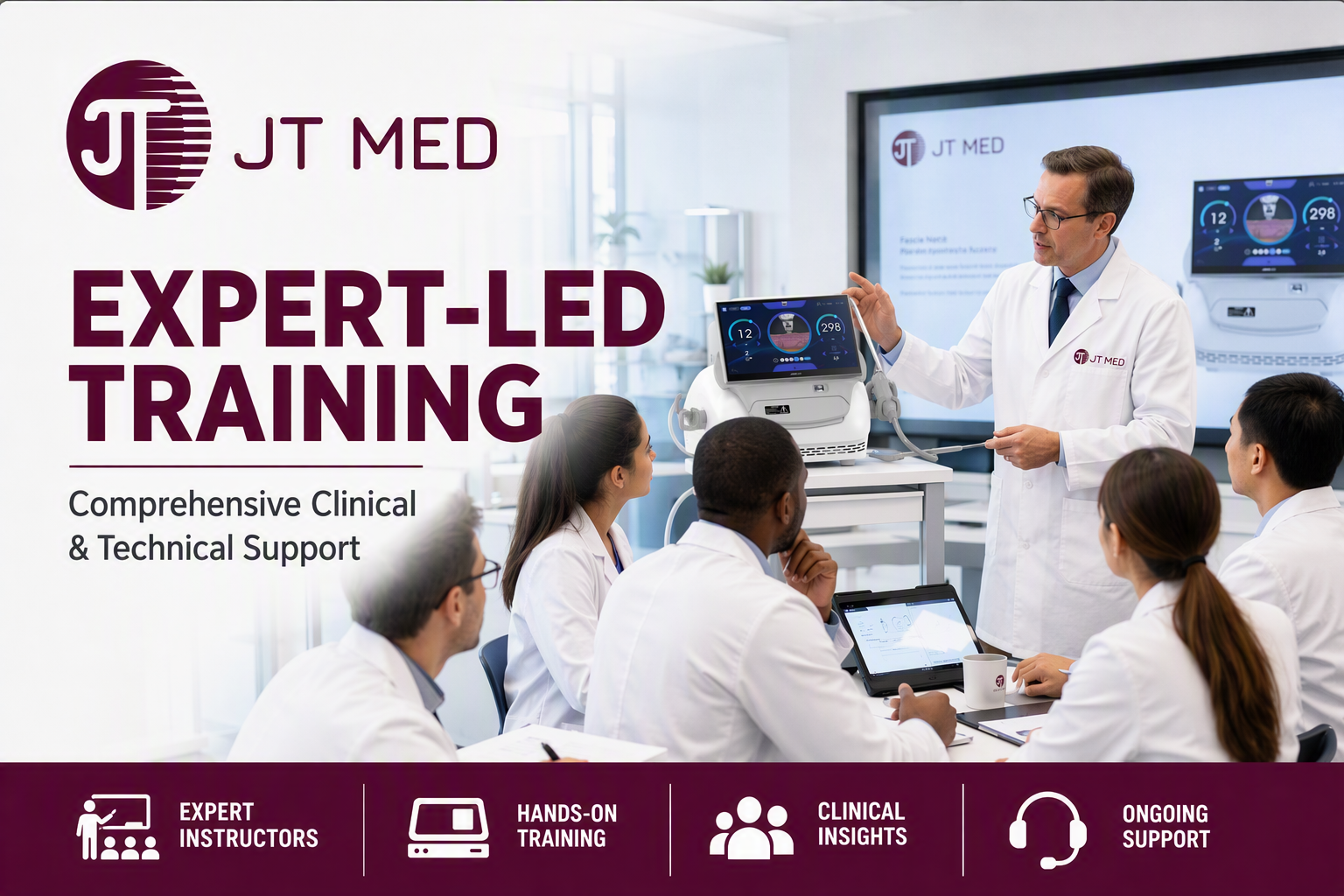
Aesthetic device deals are usually judged on the machine: power, wavelength, spot size, price. The first ninety days of ownership are decided by something else: whether the operators standing in front of it were actually taught to use it. This article looks inside a JONTELASER training day, using a documented on-site session and the structure of the distributor certification programme, and sets out what a clinic should insist on before signing.
The pattern is consistent across markets. A clinic buys a platform, the crate arrives, the machine is installed, and the operator is handed a manual in a second language. Two months later the device is running at a fraction of its capability, treatment menus have not been built, and the buyer’s team is improvising settings on live patients.
For a distributor the exposure multiplies: a new line has to be brought onto the platform across several downstream clinics at once. The equipment is identical in every clinic; the onboarding is not. That is the gap a structured training programme is designed to close, and it is why JONTELASER treats distributor training as part of the product rather than an optional add-on.
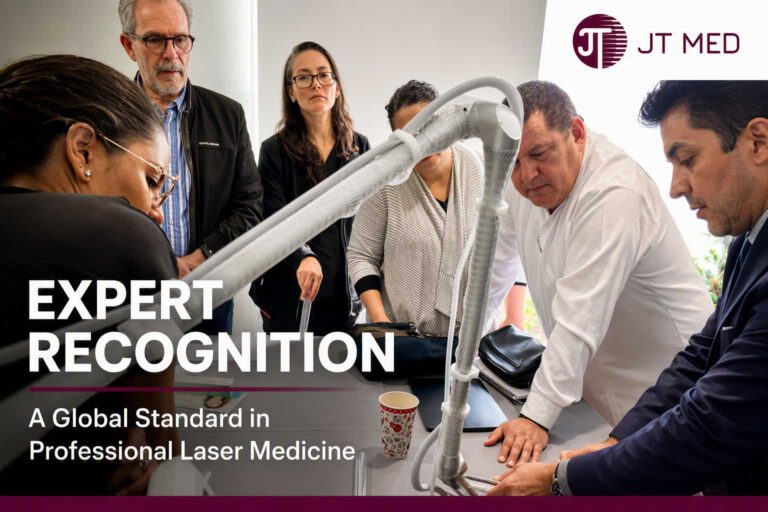
A recent on-site session documented in photographs shows the standard shape of the day rather than a lecture. Presentation material on display stands was printed in Spanish for that market. Five participants sat around a conference table with a single instructor leading, a projector showing device screens, and a treatment bed with a ring magnifier lamp set up as the practical station. Later in the day the same group moved to a working treatment room, where operators handled the applicator on a patient with laser safety eyewear in place.
Two details matter. The session was built for a group of clinic operators rather than one buyer’s own staff, which is the pattern distributor-led onboarding takes. And the classroom and the treatment bed were the same day: operators who learn a handpiece and then wait a month to touch a patient lose most of what they were taught.
| Component | What it covers | Why it matters to the buyer |
|---|---|---|
| Equipment presentation | Platform architecture, applicator range, what each configuration is for | The buyer can match the machine to the service menu instead of the reverse |
| Treatment-head handling | Setup, seating, movement across zones, end-of-session care | Most avoidable downtime starts with handling, not failure |
| Operating procedure walkthrough | Interface navigation, parameter entry, session flow, safety checks | Reduces dependence on one trained operator per clinic |
| Hands-on demonstration station | Live operation on the clinic’s own bed with the real device | Converts reading into motor memory before the first paying patient |
| Safety routine | Eyewear protocol, two-person working procedure, room control | Establishes the habit from session one rather than after an incident |
One day on site is the visible part. The programme it sits inside has four layers, and buyers evaluating a supplier should check that all four exist.
The commercial layer is the one buyers underestimate. A device that is technically well operated but never positioned in a treatment menu is a depreciating asset in a back room.
JONTELASER’s documented distributor certification runs from two to five days of hands-on instruction, depending on depth and format, and combines theoretical content with supervised practice on the device. Refresher training and product updates follow, delivered through sessions, webinars and technical bulletins as software and protocols change.
Two to five days is a useful benchmark. A one-hour online walkthrough for a multi-application platform trains no one; three weeks for a single-modality device is usually padding. What matters is less the duration than what is examined at the end.
OEM and ODM arrangements add a wrinkle. If a distributor carries the platform under its own name, with a modified interface, casing or configuration, then the training material has to be re-badged too. Generic factory slides showing a different housing and a different menu structure create hesitation at exactly the moment an operator needs certainty.
This is where an established platform earns its keep. Building an RF microneedling platform from scratch typically runs eighteen to thirty-six months; adapting an existing certified platform compresses that to a reported six to twelve months, and the documentation and quality framework travel with it. The test for any private-label buyer: see the operator manual and training deck in your own branding before the purchase order, not after.
None of these questions require a supplier to reveal commercial secrets, and a supplier who cannot answer them in writing is telling you something useful.
JONTELASER exports to more than fifty countries, and flying factory engineers to every clinic does not scale. The model that does pairs regional training capability with remote technical support and maintenance guidance, so a first-line question is answered locally and a second-line question reaches the factory.
For a clinic, this is the difference between a machine and a service; for a distributor, between a product line and a business. Beijing JONTELASER Technology Co., Ltd. builds both, under the JT MED brand, with training treated as the first deliverable after the crate is opened rather than the last item on the invoice. Ask for the agenda, the protocol document and the certification criteria: those three tell you more about a supplier than any specification sheet.0丢