Get a Free Quote in Under 24 Hours


Acne scarring is not a single condition. The visible surface reflects a specific structural problem beneath it, and the treatment must address that structure. Clinical classification into scar types is therefore the first step of planning, not a descriptive detail.
| Scar type | Structural characteristic | Clinical implication |
|---|---|---|
| Icepick | Narrow, sharply defined, extends deep | Depth-limited approaches; narrow scars may need focal techniques rather than broad resurfacing |
| Boxcar | Well-defined, shallow-to-medium depth with sharp shoulders | Responsive to resurfacing and edge-blending approaches; often the most predictable to improve |
| Rolling | Undulating surface caused by fibrous tethering to deeper tissue | Surface resurfacing alone is insufficient – the tether is the structural cause and must be addressed separately |
| Hypertrophic / keloidal | Raised, fibrous scar tissue | Requires a different therapeutic strategy; ablative resurfacing of raised scars needs careful assessment |
| Post-inflammatory pigmentary change | Colour change without structural loss (often coexisting) | Frequently accompanies textural scarring; pigmentary and structural concerns are planned and sequenced separately |
Most patients present with a combination. The practical value of classification is deciding where resurfacing helps, where the tether must be released, and where a different modality belongs.
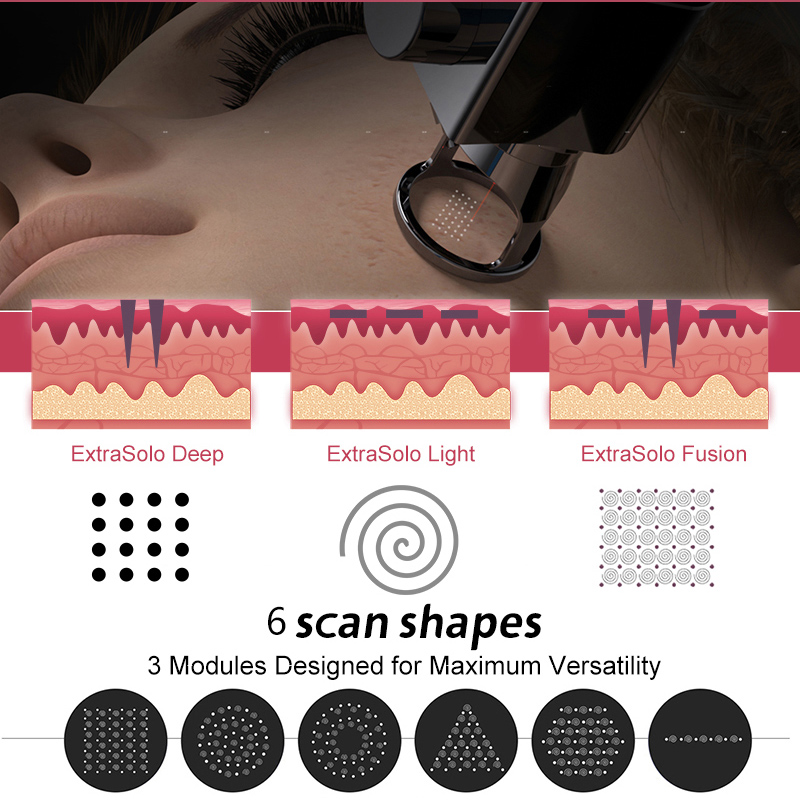
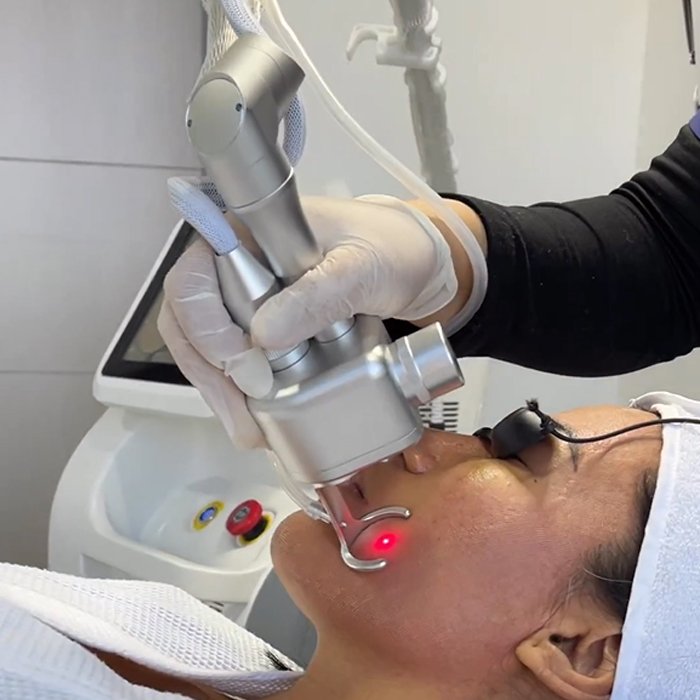
Fractional CO2 delivers energy in a grid of microscopic treatment columns rather than over the entire surface. Each column creates targeted ablation and a controlled thermal zone, while the intervening untreated tissue supports rapid re-epithelialization. The clinical consequence is that ablative depth can be achieved with a healing pattern that a fully ablative approach could not match.
Within scar tissue specifically, three processes follow:
Because these are biological processes, improvement is progressive. Assessment is best made weeks to months after a session rather than immediately.
| Scar presentation | Fractional CO2 role | Supporting approach |
|---|---|---|
| Shallow boxcar and textural irregularity | Primary modality – resurfacing at controlled depth with edge blending | Sequential sessions with response-based progression |
| Deep icepick scarring | Adjunct – addresses surrounding texture rather than the narrow depth of the scar itself | Focal techniques directed at the individual scar |
| Rolling scarring with tethering | Secondary – improves surface quality after the structural tether is addressed | Release of the fibrous tether as the primary step |
| Mixed textural and laxity concerns | Resurfacing layer of a combined plan | Non-ablative or RF microneedling for tightening in a sequenced protocol |
| Pigmentary change with scarring | Used with caution and sequenced carefully | Pigment-directed treatment and priming before ablative work |
In practice, ablative resurfacing is rarely the whole plan. A clinic that offers several energy modalities can address each component of a scar pattern with the modality that fits it:
Sequencing by tissue depth – and allowing healing between stages – is what makes a combination plan additive rather than overlapping. The order and interval are clinical decisions made after assessment.
| Consideration | Clinical management |
|---|---|
| Crusting and healing phase (typically about five to seven days) | Explain before treatment; provide written aftercare covering cleansing, barrier support, and when to resume actives and makeup per practice protocol |
| Post-inflammatory hyperpigmentation risk, higher in darker skin types | Consider a non-ablative or RF microneedling alternative, or a conservative ablative protocol with priming and close follow-up |
| Erythema during healing | Expected; advise on realistic social downtime and sun avoidance |
| Infection and delayed healing | Aftercare compliance and early review of any atypical healing |
| Patient suitability | Screen for active acne, infection, recent isotretinoin therapy, scarring history, and photosensitizing medication |
Honest positioning matters here: for patients who cannot accept a week of healing or who carry a high pigmentary risk, RF microneedling may be the more appropriate tool for textural improvement, with ablative resurfacing reserved for cases where its depth advantage is needed.