Get a Free Quote in Under 24 Hours


Most buying guides for laser hair removal equipment assume one treatment room, one operator and an empty diary. A center running stacked appointments has a different problem: the machine sits inside a schedule, and every minute it cannot emit is a minute the room cannot bill. That reframing changes which specifications matter and how a demonstration should run.
This guide is for the buyer choosing a laser hair removal device for a high-volume aesthetic center – a clinic or medspa where a laser room is booked back to back and more than one practitioner uses the same platform. It sets out a selection sequence, the archetypes you are choosing between, and the evidence a manufacturer should produce on request.
Definition. For procurement purposes, a high-volume aesthetic center is one where a single laser room is booked back to back across the working day, and where the platform is shared by more than one operator. The first condition turns the device into a scheduling constraint. The second turns it into a consistency problem, because the machine must produce the same result in the hands of the least experienced practitioner, not only the one who attended factory training.
The selection question therefore stops being “which device gives the best single result” and becomes “which device gives a repeatable result at the rate the schedule requires, with the operators who will actually use it, without losing days to service”. A device that wins a side-by-side demonstration on one patient can still lose on a Tuesday afternoon, when three practitioners rotate through the same room and the fourth client of the day has deep skin and coarse hair.
A device is productive only while it is emitting. Everything else in the slot is overhead: patch test, skin preparation, cooling set-up, parameter entry, spot-size change, cleaning between clients, and recovery after a fault or an uncomfortable session. At low volume the diary absorbs those minutes. At high volume they decide whether the room pays for itself.
This is why a datasheet maximum is a weak buying signal. Two platforms with the same nominal power can produce very different room-hour productivity if one throttles under sustained load, if its cooling needs recovery between sessions, or if parameters have to be re-entered for every client. The useful metric is effective emission time per booked hour, and it can only be measured.
Run these stages in order. Each one can disqualify a supplier, and together they produce a comparable file for every shortlisted vendor – the only reliable way to compare quotations written in different formats.
Take the treatment you sell most – full leg, back, or a large-area combination – and write down minutes of actual emission against total slot minutes. Then set the number of slots the room must turn per day. Only now is the power question answerable: the step from a 1200 W to an 1800 W configuration is a throughput decision, and it earns its premium when emission time binds the schedule, not when consultation or staffing does.
Factory demonstrations run on optimal skin, in optimal conditions, through the manufacturer’s own application specialist. That is not the condition you are buying for. Ask for the unit in your room for a day of consecutive sessions and record:
Ask for the service commitment in writing: response time, spare handpiece or loaner availability, diode bar replacement terms and lead time, and whether consumables are single-source. A modestly higher price with a local spare-parts commitment is usually cheaper than a lower price with a long part lead time, because downtime is measured in lost bookings rather than repair invoices.
The certificate must describe the configuration you are importing – wavelengths, power, handpiece set – not the platform family in general. For the European route that means CE documentation; for the United States, the FDA framework; for Australia, TGA. ISO 13485 and MDSAP show how the unit was built and audited, but they do not replace market authorization in your jurisdiction. Check the scope page against your purchase order and confirm the route with your regulatory advisor before the unit ships.
The shortlist usually comes down to four archetypes. They are not ranked: the answer depends on your client mix and which constraint binds the schedule. Read the table as a fit test.
| Archetype | Throughput character | Skin-type reach | Operating load | Where it fits |
|---|---|---|---|---|
| Single-wavelength 808 nm diode | Efficient on medium tones with dark hair; narrowest parameter envelope | Limited at both extremes | Lowest – one wavelength, simple protocol set | Homogeneous client base, one dominant protocol |
| Multi-wavelength diode (755/808/940/1064 nm) | One platform covers the range; wavelength changeover adds a step | Broadest of the four | Moderate – more protocols to train and audit | Mixed client base; the usual choice for a diversified center |
| IPL | Slower per area; broadband output is less selective | Broad but harder to control on deep tones | Higher filter and consumable load | Entry-level or adjunct use, not a diode-room substitute at volume |
| Long-pulse 1064 nm Nd:YAG | Strong on deep tones and coarse hair; different comfort profile | Excellent on darker skin | Moderate – a separate platform to maintain | Centers with a high proportion of deep skin tones |
A multi-wavelength diode covers the widest range of the four, which is why it dominates high-volume purchasing. Coverage is not throughput, though: a center with a mostly medium-tone, dark-hair client base may get more room-hours from a simpler single-wavelength platform, provided cooling and sustained output hold up under load.
A feature matters only if it changes something for the patient in the chair or the room that must turn over. The table translates the platform’s specifications into both.
| Feature | Advantage | Benefit to the patient | Benefit to the clinic |
|---|---|---|---|
| 755/808/940/1064 nm coverage | One platform addresses light through deep skin tones | Treatment matched to their skin and hair rather than declined | Fewer lost bookings; no second machine bought purely for deep tones |
| 1200 W and 1800 W configurations | Output sized to the appointment, not the brochure | Shorter emission time per area, so a more tolerable session | Room-hour capacity matched to the diary you actually run |
| Semiconductor (TEC) contact cooling | Skin temperature controlled at the handpiece | Less discomfort; fewer sessions abandoned part-way | Fewer rebookings and more completed courses |
| Replaceable spot and handpiece options | Large-area and precision work from one platform | Appropriate window for legs and back as well as face | One device serves the full service menu |
| ISO 13485 and MDSAP evidence | An auditable quality system behind the build | Consistent behaviour across a treatment course | Documentation that survives inspection and import registration |
| OEM/ODM, training and after-sales | Platform and service model adapted to your market | Consistent protocols whichever practitioner is on shift | Faster onboarding and lower operator variance |
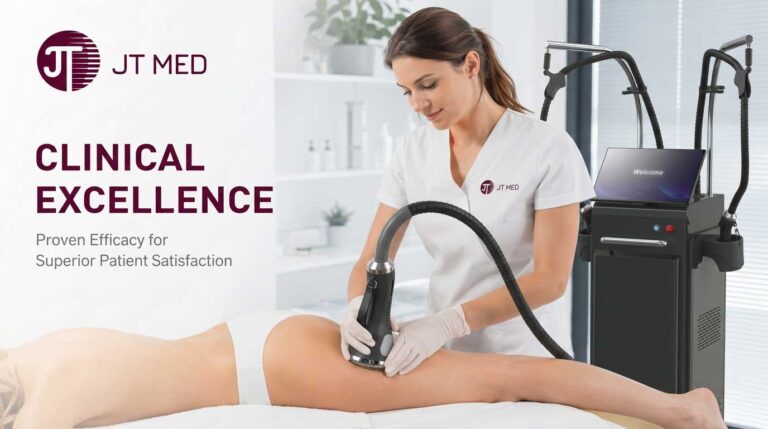
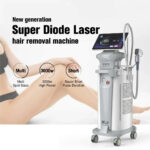
JT MED is the premium medical aesthetic brand of Beijing JONTELASER Technology Co., Ltd., a manufacturer established in 2004 that exports to more than 50 countries. The diode laser platform is offered in 755/808/940/1064 nm configurations with 1200 W and 1800 W power options. Manufacturing is supported by ISO 13485 certification and MDSAP, with compliance documentation aligned to the CE, FDA and TGA frameworks; buyers should confirm the scope for their market and configuration. OEM/ODM programmes, operator training, marketing support and after-sales service are also provided.
Send the same request to every shortlisted supplier. A vendor that cannot answer the technical items in writing is telling you something useful before you place an order.
Keep one file per supplier. When quotations differ by a few percent, that file usually decides the purchase, because it shows where the cheaper option removed something you will pay for later.
A single laser room booked back to back through the day, plus more than one operator sharing the platform. Client count alone is a weaker definition because it depends on service mix; the scheduling condition is what makes the device a bottleneck.
It depends whether your constraint is emission time or room count. One larger platform raises the ceiling in a single room but keeps a single point of failure. Two smaller units add redundancy and allow parallel rooms, at the cost of duplicated service and training. Answer it after the slot modelling, not before.
Count three numbers per session: minutes of emission, total slot minutes, and interruptions. Run consecutive sessions, because cooling behaviour, derating and operator fatigue appear from the second onward. A single session is a product demo; a full day is a throughput test.
The share of operating time a platform sustains rated output without throttling or a forced cooling pause. Datasheets rarely state it, so test it across consecutive sessions and watch for output reduction during the hour your diary is fullest. That hour is the only one that matters for capacity planning.
Spot and handpiece wear, cooling-related servicing, protective consumables, and eventually the diode bars. Ask for the full list with unit costs and check for single-source items. A low machine price with single-source consumables can invert the economics over a full course of treatment.
A response time, a defined route to a spare handpiece or loaner, and a bar replacement lead time. Contractual uptime language is worth more than a longer warranty that still leaves the room idle for weeks. Ask how the commitment is measured and who holds spares locally.
Some diode settings are used for skin rejuvenation alongside hair reduction. Treat it as secondary: ask for the parameter set, the supporting training and the market documentation covering it, but do not let it drive the purchase if hair reduction justifies the machine.
Ask for the basis: bar supplier, test conditions, and rated pulses at a stated fluence and duty assumption. A lifetime figure without those parameters cannot be compared between suppliers. Pair it with replacement price and lead time, since a long nominal life with a slow replacement route still costs room-days.
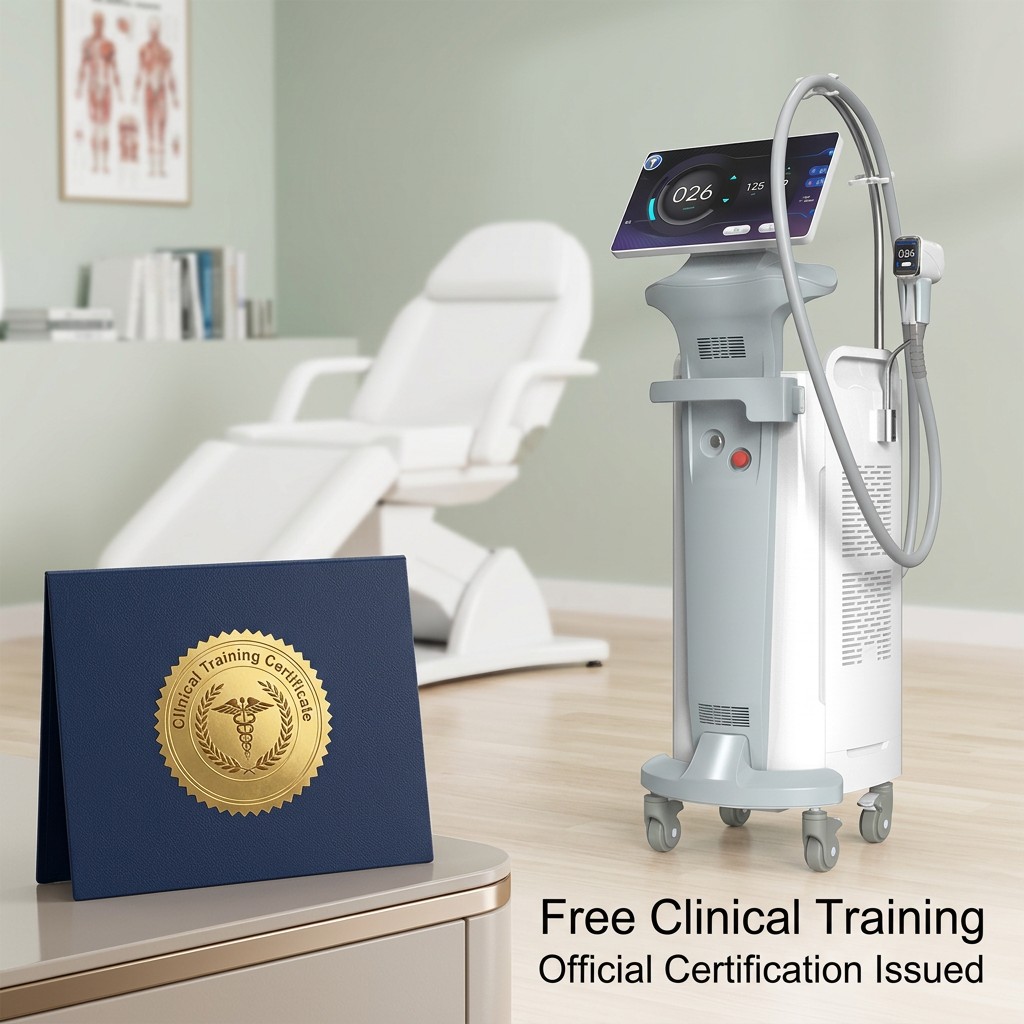
More than a demonstration: parameter selection for your client mix, hands-on sessions on your own unit, and a written protocol per body area, so the least experienced practitioner produces the same result as the most experienced. Budget for retraining at staff turnover; operator variance is one of the quietest costs in a busy room.
Certificate scope matched to the configuration, test reports, labelling and instructions for use in the required language, and manufacturing evidence such as ISO 13485 and MDSAP. Requirements differ by market, so confirm the list with your regulatory advisor and freight forwarder before ordering.
Decide upfront whether the second unit will be the same model, so training, spares and protocols stay shared, and whether the first moves to a secondary room rather than being sold. Standardising on one platform family is usually cheaper across three units than a mixed fleet bought one machine at a time.
Buying on nominal power and price, then discovering the real constraint was cooling recovery, operator variance or a parts lead time. The specification that decides whether the room pays is the one you measure on the last session of the busiest day.
Share your client mix, the treatments you sell most and the number of slots your laser room must turn per day. The JT MED export team will return the configuration that matches, the certificate scope for your market, and a quotation comparable line by line with the pack above. Catalogue, OEM/ODM options and the training outline are available on request.